
Design, Bidding, and Construction Oversight – Seattle, WA
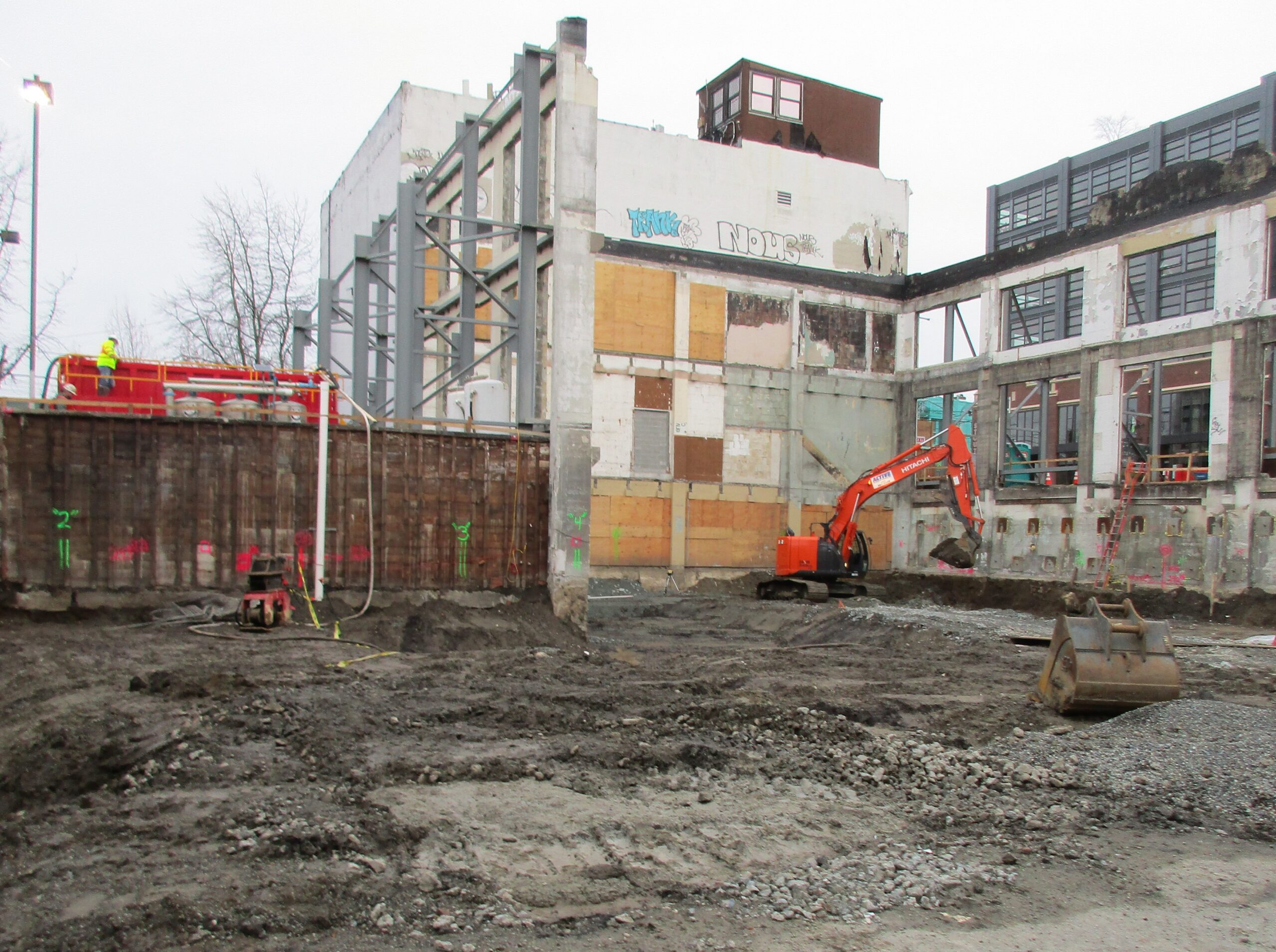
CRETE provided consulting and engineering support for the cleanup and redevelopment of the former REI flagship store on Capitol Hill in Seattle WA.
Forensic data was collected to identify total petroleum hydrocarbon (TPH) sources and support cost recovery efforts. The neighboring property was also identified as a source of chlorinated solvent (CVOC) impacts.
The Cleanup Action included the demolition of structures and above ground features and the excavation and off-site disposal of TPH and CVOC-impacted soil. A portion of the excavation adjacent the neighboring contaminated property was backfilled with low permeability controlled density fill (CDF) to reduce the potential for off-site contamination to impact the property. A vapor barrier was incorporated into design of the new building to address low-level CVOC contaminated groundwater.
Long-term groundwater monitoring and reporting was performed to demonstrate that cleanup levels were achieved.
Work Performed
- Completed an RI/FS and Cleanup Action Plan under the Washington Department of Ecology Voluntary Cleanup Program (VCP)
- Excavated and disposed of 2,500 tons of contaminated soil and a former underground storage tank (UST)
- Deep excavations along the neighboring building were predefined to eliminate the need to confirmation soil sampling and leaving the excavation open adjacent to the structure.
- Responded to soil impacts discovered outside the original cleanup area.
- CRETE led permitting efforts with King County and the City of Seattle for stormwater management.
Value Added
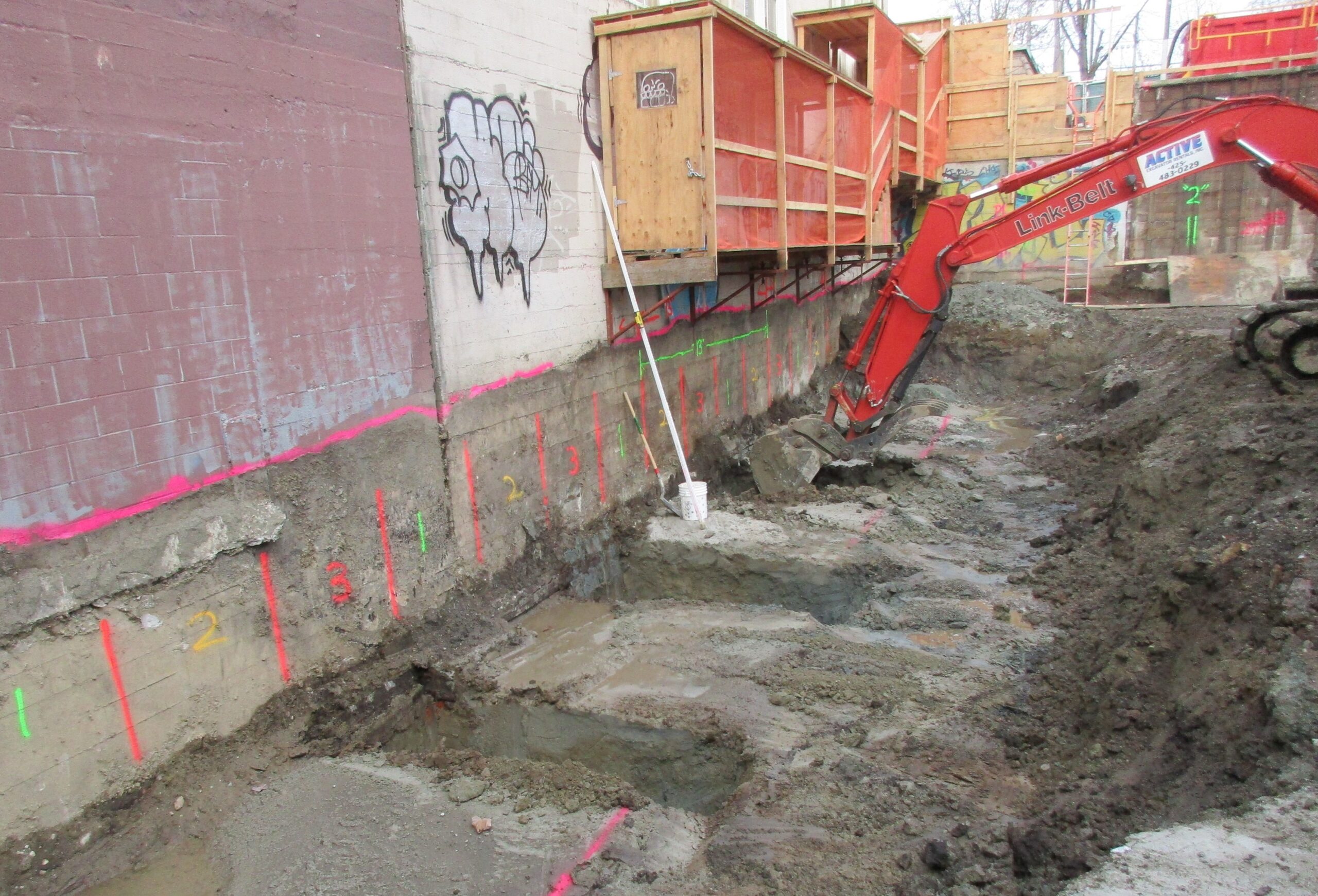
- All cleanup excavation work was performed within a 2-week timeframe to facilitate site redevelopment.
- Design elements incorporated the historic preservation elements required by the City of Seattle to preserve the character of the former building
- Responded to soil impacts discovered outside the original cleanup area.
- CRETE led permitting efforts with King County and the City of Seattle for stormwater management.
- Excavation, shoring, and backfilling were coordinated with the geotechnical engineer to allow complete removal of impacted soil in close proximity to the adjacent and neighboring building.